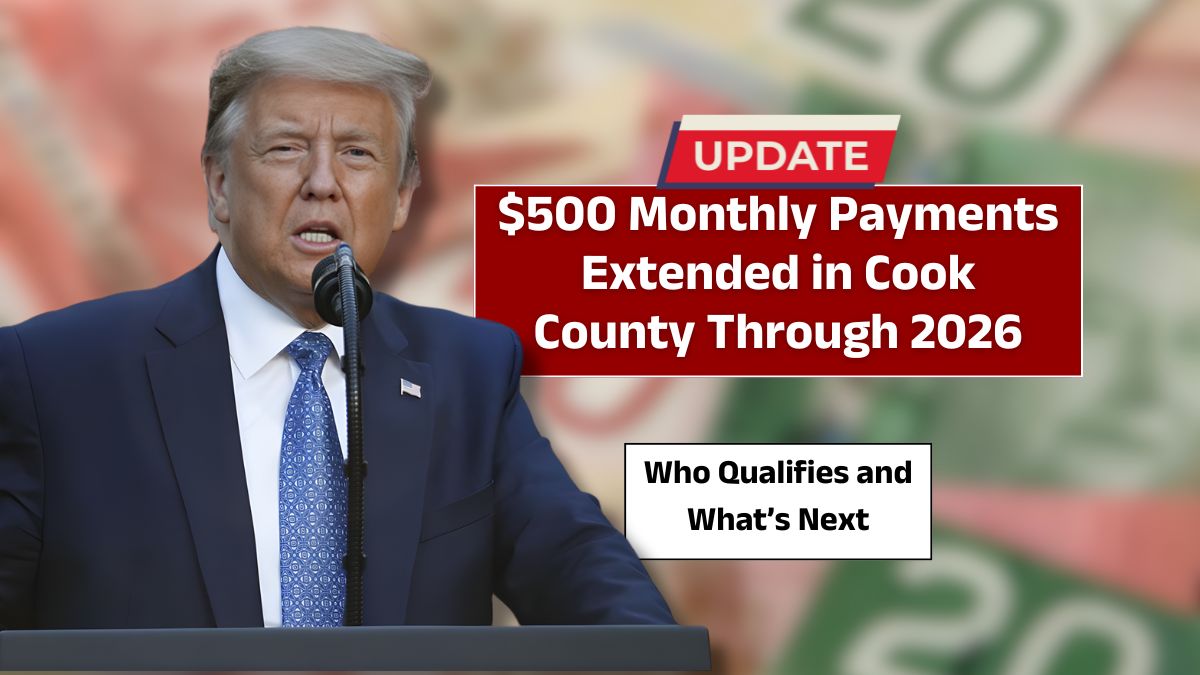
A major financial lifeline for working families is getting a longer lease on life. Cook County, Illinois—the second-most populous county in the U.S.—has officially extended its $500-per-month guaranteed income program through 2026. The move is being celebrated by supporters as a bold step toward economic stability for low- and middle-income residents, while critics remain skeptical of its long-term effects.
Let’s break down what this means, who could benefit, and what to expect next.
Background

Launched in 2022, Cook County’s guaranteed income pilot was initially funded with $42 million in federal COVID-19 relief. It provided 3,250 households with $500 monthly payments, no strings attached. No work requirements, no restrictions on how the money could be used—just direct cash support.
The idea? Give people the financial breathing room they need to afford groceries, pay rent, cover child care, or handle life’s emergencies. According to a participant survey, the program worked: it reduced stress and boosted financial stability.
Now, Cook County is doubling down. In November 2025, the Board of Commissioners approved $7.5 million from the 2026 budget to continue the program.
Expansion

The new funding will come from the county’s equity fund, though officials say they may use remaining pandemic relief dollars to fund future rounds as well.
Here’s what we know so far:
| Program Feature | Details |
|---|---|
| Monthly Payment | $500 |
| Duration | Through all of 2026 |
| Budget Allocated | $7.5 million |
| Past Participants | 3,250 households (in 2022–2023) |
| Application Timeline | Finalized mid-to-late 2025 |
| Eligibility Criteria | Still under review |
| Approval Required | Yes – By County Board after review |
Officials expect the Bureau of Economic Development to finalize details by mid to late 2025, followed by board approval. Applications will open shortly after.
National Impact

Cook County isn’t alone. Since 2018, at least 100 guaranteed income programs have been launched in cities and counties across the U.S., according to the Urban Institute.
But Cook County’s program stands out for two big reasons:
- Size – It’s one of the largest pilots in the country.
- Longevity – It’s becoming one of the first to be made permanent.
This shows that guaranteed income is shifting from short-term experiment to long-term policy tool—at least on the local level.
Trump’s Proposal
While Cook County is working on a local solution, President Donald Trump has proposed a federal version: a $2,000 “tariff dividend” check for Americans, excluding high-income earners.
According to Trump:
“A dividend of at least $2,000 a person (not including high-income people!) will be paid to everyone.”
He claims it would be funded by tariff revenue, and would also help pay down the $37 trillion national debt.
However, Treasury Secretary Scott Bessent quickly clarified that such payments would require new legislation, which doesn’t exist yet. And here’s where the math gets tricky:
| Financial Metric | Estimate |
|---|---|
| Tariff Revenue (to date) | ~$120 billion |
| Cost for $2,000 to 150M people | ~$300 billion |
| Shortfall | ~$180 billion |
Bottom line: Trump’s plan is just a proposal, with no bill or clear path to implementation.
GI vs. UBI
Here’s a quick refresher on the difference between Guaranteed Income (GI) and Universal Basic Income (UBI):
| Feature | Guaranteed Income | Universal Basic Income |
|---|---|---|
| Who Gets It | Low-/middle-income only | Everyone, regardless of income |
| Means Tested? | Yes | No |
| Purpose | Reduce poverty, build equity | Universal safety net, simplify aid |
| Conditions? | No conditions on spending | No conditions either |
In short, GI is targeted and focused, while UBI is universal and sweeping. Cook County’s program is a form of guaranteed income, designed to help specific residents most at risk of falling behind.
What People Are Saying
Supporters Praise the Program
Sarah Saheb, Director of Economic Security Illinois, said:
“With working families struggling to afford their daily lives, Cook County is taking bold action… helping families afford groceries, child care, and transportation.”
Critics Warn of Unintended Consequences
Josh Bandoch, from the Illinois Policy Institute, criticized the extension:
“Guaranteed income is a failed strategy… it leaves people with less work experience and lower earnings.”
These opposing viewpoints highlight the core debate around guaranteed income: Is it a hand-up or a handout?
What’s Next
Here’s what residents should watch for in 2025:
- Eligibility Rules Finalized – Expect updates by mid-late 2025
- Application Process Opens – Likely in late 2025 or early 2026
- Payments Start – Sometime in early 2026, pending board approval
For those interested in Trump’s federal plan—don’t get too excited yet. No legislation has been filed, and experts say the costs far exceed available tariff revenue.
Cook County, however, is moving forward. Whether you’re a supporter or a skeptic, it’s clear that guaranteed income is no longer just an experiment—it’s becoming part of public policy.
FAQs
Who qualifies for Cook County’s $500 payments?
Eligibility is still under review and will be announced in 2025.
When will applications open?
Applications are expected to open after mid-to-late 2025.
Are the payments guaranteed for 2026?
Yes, pending board approval and budget allocation.
Is Trump’s $2,000 check plan real?
Not yet—no legislation has been filed to make it law.
How is GI different from UBI?
GI targets low/mid-income; UBI goes to everyone, no conditions.