

Trevor Pinnock might be best known for his work behind the harpsichord, but when he steps on stage to conduct, something special happens. His style isn’t loud, flashy, or ego-driven. Instead, it’s subtle, collaborative, and deeply musical.
In a world full of theatrical maestros waving batons like magic wands, Pinnock brings a refreshing kind of leadership—one that’s rooted in listening, history, and heart.
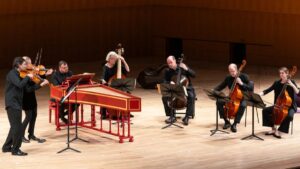
So what exactly makes Trevor Pinnock’s conducting style so unique? Let’s look into the quiet power behind this Baroque master’s presence on stage.
Humble
One of Pinnock’s most striking qualities as a conductor is his humility. He doesn’t command the stage with flamboyant gestures or dominating energy. Instead, he works with his musicians, not above them. Watch any live performance, and you’ll notice he often gives subtle cues, trusting his ensemble to take responsibility for the music.
This humility stems from his background in chamber music and period performance. In Baroque and early Classical works, the conductor isn’t supposed to control every detail. Pinnock respects that. He leads with guidance, not orders—more like a first among equals than a boss.
Historical
Pinnock is a pioneer of historically informed performance, and that shows in everything he does on stage. His tempos, phrasing, and instrumentation reflect deep research and a clear understanding of the era. But he doesn’t let history chain him down. His performances are full of life, not lectures in costume.
His gestures are often economical—just enough to shape the music without over-sculpting it. This allows the natural phrasing and pulse of Baroque music to shine through. It’s conducting that feels right for the repertoire, rather than impressing the crowd.
Communicative
If you’ve ever seen Pinnock in rehearsal, you know he’s an excellent communicator. He speaks to his musicians with clarity and kindness, and it’s clear he values collaboration. On stage, that communication continues—through eye contact, small nods, expressive hands, and often his own harpsichord playing.
He’s a musician’s conductor. His style says, “Let’s do this together,” rather than “Follow me.” That creates an atmosphere where players can express themselves more freely. The result? Performances that feel organic, alive, and full of character.
Expressive
Don’t mistake subtlety for dullness. Pinnock’s conducting is expressive in all the right ways. Whether he’s leading a joyful Handel overture or a profound Mozart mass, he brings emotional honesty to every bar. He doesn’t overplay the drama but lets it unfold naturally through dynamics, articulation, and color.
And while he’s not a “showy” conductor, there are moments when his passion visibly rises. You might see a bounce in his step, a broad smile, or an intense look during a complex passage. It’s not for the audience—it’s for the music. That authenticity is part of what makes him so captivating.
Multi-Talented
One of the rare things about Pinnock is that he often conducts from the keyboard. Especially in Baroque concertos, you’ll find him leading while playing the harpsichord. That’s not just a cool party trick—it’s a nod to how this music was originally performed.
Conducting from the keyboard demands a deep connection with the ensemble. It also means Pinnock is part of the texture, not just hovering above it. That physical involvement with the music adds a special energy and sense of unity that few other conductors achieve.
Trusted
Over the years, Pinnock has become a go-to conductor for orchestras wanting to explore period repertoire with depth and integrity. From the English Concert to guest roles with top international ensembles, his reputation is built on trust. Musicians know he’ll bring both scholarship and soul.
Audiences, too, feel that connection. His concerts aren’t just performances—they’re shared experiences. Whether in a grand concert hall or a small chamber venue, Pinnock’s presence makes the room feel intimate.
Summary Table
Let’s break down what makes Pinnock’s conducting so special:
| Quality | Description |
|---|---|
| Humility | Leads collaboratively, never overbearing |
| Historical | Historically informed without being rigid |
| Communication | Clear, respectful, and encouraging |
| Expression | Emotionally honest, never exaggerated |
| Harpsichord | Conducts from the keyboard when appropriate |
| Trust | Respected by musicians and loved by audiences |
There’s no one quite like Trevor Pinnock on the podium. In a profession where grand gestures and oversized egos often steal the spotlight, he offers a quiet confidence that draws listeners in rather than overwhelming them. His conducting is about service—to the music, to the musicians, and to the audience.
In the end, it’s not about how big his gestures are—it’s about how deeply he understands what the music needs. That’s what makes his conducting style not just unique, but unforgettable.
FAQs
Does Pinnock conduct with a baton?
No, he usually conducts with his hands or from the harpsichord.
What makes his style unique?
It’s collaborative, subtle, and historically informed.
Does he only conduct Baroque music?
Mostly, but he also explores Mozart and Haydn.
Is Pinnock a showy conductor?
No, he’s expressive but never theatrical.
Does he conduct while playing?
Yes, especially in Baroque concertos on harpsichord.