
Few pieces in classical music have the hypnotic pull and emotional depth of Bach’s Goldberg Variations. Over the years, this iconic keyboard work has been interpreted by many legendary performers. Yet, Trevor Pinnock’s version continues to stand out — even decades after its release. But what exactly makes his interpretation so special?
Let’s cut into why Pinnock’s take on the Goldberg Variations is celebrated by music lovers and critics alike.
Instrument
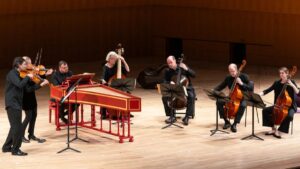
First things first — Pinnock performs the Goldberg Variations on a harpsichord, not a modern piano. That choice alone changes everything. Unlike the piano, the harpsichord produces sound by plucking strings rather than striking them. This gives it a crisp, almost sparkling tone that suits Bach’s intricate counterpoint beautifully.
In an age where most recordings use the piano for its expressive range, Pinnock sticks with authenticity. By doing so, he brings the music closer to how it might have sounded in Bach’s time. It’s not just historical — it’s immersive.
Clarity
One of the most praised aspects of Pinnock’s interpretation is his clarity. Each voice in Bach’s complex counterpoint can be heard cleanly. Whether it’s a fast-paced variation or a gentle canon, you never lose track of the individual lines. It feels like watching a ballet where every dancer moves perfectly in sync, but you can still follow each one.
This clarity isn’t just a technical achievement — it allows the listener to feel the structure of the music more deeply. With Pinnock, it’s not just notes. It’s a conversation between voices.
Tempo
Pinnock doesn’t rush. His tempos are carefully considered, letting each variation breathe. In many recordings, performers might treat faster variations as technical showpieces. But Pinnock focuses more on expression than speed. That restraint gives the work a sense of poise and dignity.
This thoughtful pacing makes the performance feel like a journey — not a race. You’re not just listening to music; you’re traveling through a soundscape that unfolds gradually and deliberately.
Emotion
Yes, even a harpsichord can be expressive — if played by the right hands. Pinnock finds emotional depth in the Goldberg Variations that might surprise first-time listeners. From the serenity of the Aria to the joy in the gigues and the sorrow in minor-key variations, there’s a full range of feeling here.
What’s most striking is how naturally it all flows. There’s no forced drama or exaggerated flourishes. Pinnock trusts Bach’s writing, and in doing so, he lets the emotional content rise organically from the music.
Structure
Bach’s Goldberg Variations follows a strict pattern: an opening Aria, 30 variations, and a return to the Aria. Within those variations are canons, dances, and genre pieces — every third variation being a canon. Pinnock makes this structure feel almost architectural. You hear the logic. You feel the balance.
It’s like walking through a beautifully designed building. Every room (or variation) feels different, but they all belong to the same grand design. That sense of unity is hard to achieve, but Pinnock nails it.
Sound
Let’s not forget the sound engineering. Pinnock’s recording was made using period instruments, in an acoustically warm setting. The harpsichord doesn’t sound thin or tinny — it’s full, rich, and clear. You can hear the pluck of every note, the air around the instrument, even the subtle resonance of the room.
That high-quality production adds another layer of intimacy. It’s like you’re in the room with the performer, hearing every detail up close.
Legacy
Trevor Pinnock was already a respected figure in Baroque music when he recorded the Goldberg Variations, but this project helped cement his reputation. Unlike Glenn Gould’s quirky and expressive piano renditions, Pinnock offers something closer to historical truth — but without sounding academic.
His version appeals both to purists and casual listeners. That rare balance makes it a go-to recording for those discovering the work and for those who’ve loved it for years.
Comparison
To understand just how unique Pinnock’s version is, here’s a quick comparison:
| Performer | Instrument | Style | Tempo | Emotional Tone |
|---|---|---|---|---|
| Glenn Gould | Piano | Expressive, quirky | Often fast | Dramatic |
| Murray Perahia | Piano | Smooth, lyrical | Moderate | Warm |
| Trevor Pinnock | Harpsichord | Clear, structured | Measured | Poised & deep |
| Rosalyn Tureck | Piano | Intellectual | Slow to moderate | Reflective |
As the table shows, Pinnock’s clarity, use of harpsichord, and elegant pacing put him in a class of his own.
There’s something timeless about Trevor Pinnock’s Goldberg Variations. It doesn’t scream for attention — it invites you in. His choice of instrument, his precise playing, and his deep respect for the music’s form all combine to make something special. It’s not just about how it sounds — it’s about how it feels. And with Pinnock, it feels like coming home to Bach.
FAQs
Why use a harpsichord, not a piano?
Pinnock uses the harpsichord for historical accuracy and tonal clarity.
Is Pinnock’s version slow?
His tempos are moderate and carefully balanced, not sluggish.
What stands out in his playing?
His clarity, structure, and emotional restraint stand out.
When was Pinnock’s version recorded?
His first recording was released in the early 1980s.
How is the audio quality?
It’s crisp, warm, and highly detailed thanks to great engineering.