
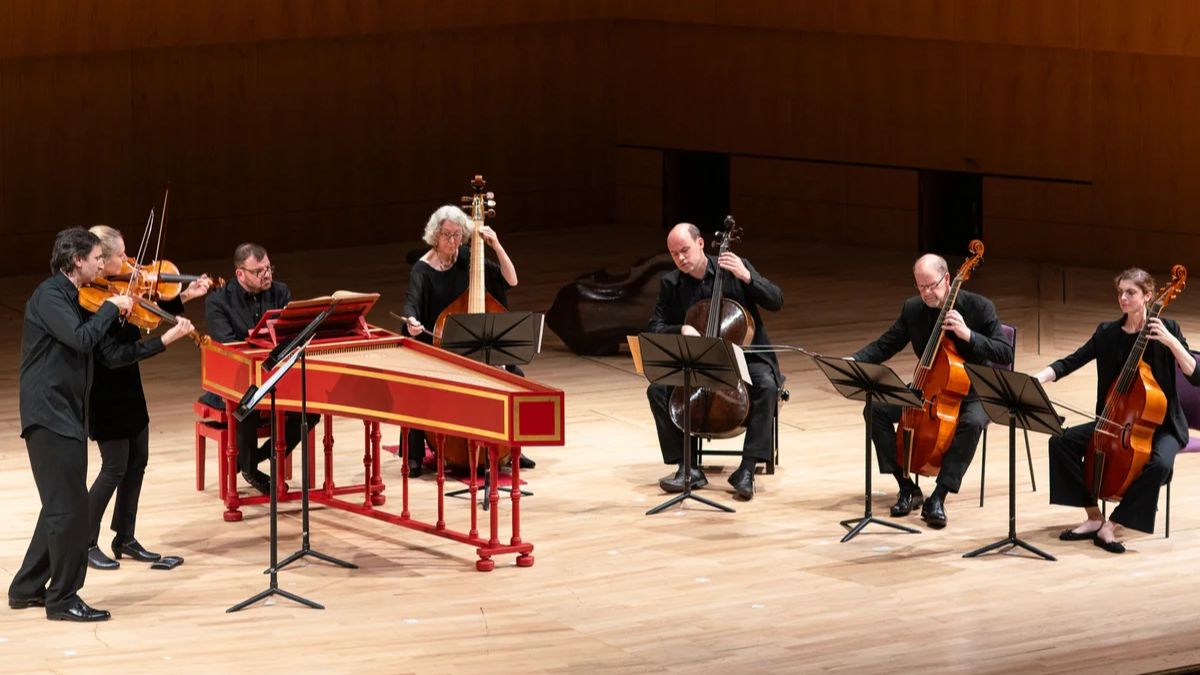
J.S. Bach’s Brandenburg Concertos are some of the most joyous, inventive, and varied works in all of classical music. Written around 1721 as a gift to the Margrave of Brandenburg, these six concertos show Bach at his most playful, clever, and experimental. Each one has its own character — a unique ensemble, a distinct mood, and a fresh set of musical tricks.
But unless you’re a musicologist, diving into these pieces can feel overwhelming. That’s why we’ve put together this movement-by-movement guide to help you listen more deeply and enjoy every minute.
Whether you’re discovering these concertos for the first time or returning to them with fresh ears, this guide is your map through Bach’s brilliant Baroque landscape.
Concerto No. 1 in F Major, BWV 1046
Instrumentation: Horns, oboes, bassoon, violino piccolo, strings, continuo
I. Allegro
A festive opening. The hunting horns immediately grab your attention — this is the only Brandenburg to include them. It’s bright and rhythmic, full of dance energy and counterpoint.
II. Adagio
A gentle, graceful interlude led by oboes and violino piccolo. It feels almost like a pastoral lullaby after the wild ride of the first movement.
III. Allegro
A lively dance with repeated phrases and a steady bounce. It feels more intimate than the first movement but still rhythmically engaging.
IV. Menuet – Trio – Polacca – Trio II
A rare fourth movement! It’s a sequence of courtly dances, almost like a Baroque party with changing rooms. Each dance has its own color, showing off different instrument combinations.
Concerto No. 2 in F Major, BWV 1047
Instrumentation: Trumpet, recorder, oboe, violin, strings, continuo
I. Allegro
The high Baroque at its peak. The trumpet part is famously difficult — bright, dazzling, and virtuosic. The solo group (trumpet, recorder, oboe, and violin) trade phrases in thrilling counterpoint.
II. Andante
A sudden shift to mellow tones. The trumpet drops out, and the solo trio (recorder, oboe, violin) weave a soft, lyrical conversation over a steady bass.
III. Allegro assai
The trumpet returns in full force. Short, joyful bursts of rhythm and tight coordination between the soloists. It’s energetic and perfectly balanced.
Concerto No. 3 in G Major, BWV 1048
Instrumentation: 3 violins, 3 violas, 3 cellos, continuo
I. Allegro
This one’s all strings — no winds, no soloist, just layers of rhythm and motion. It feels like an orchestra playing a string trio. Driving and energetic, it’s full of rhythmic unity and rich harmonies.
II. Adagio
Just two chords — that’s it. A musical pause or breath. In performance, some groups improvise a short transition or insert a slow movement from another work.
III. Allegro
Back to the sprint. It’s built on fast-moving triplets and fugal textures. One of the most exciting finales in the set.
Concerto No. 4 in G Major, BWV 1049
Instrumentation: Violin, two recorders, strings, continuo
I. Allegro
The violin leads, with the recorders adding a soft, almost bird-like backdrop. The texture is light and joyful, like a woodland scene in music.
II. Andante
A simple, flowing melody over a walking bass line. The contrast between the violin and the recorders creates a warm, introspective mood.
III. Presto
Fast and furious. The violin goes wild with quick runs and patterns. It’s energetic and rhythmically clever — a great example of Bach’s playfulness.
Concerto No. 5 in D Major, BWV 1050
Instrumentation: Harpsichord, flute, violin, strings, continuo
I. Allegro
The harpsichord finally gets its moment. After some group interplay, it launches into a long solo cadenza — totally unexpected for the time. It’s one of the earliest keyboard concertos in history.
II. Affettuoso
A gentle trio for flute, violin, and harpsichord. Delicate and conversational, it shows Bach’s lyrical side.
III. Allegro
A joyful final movement with tight rhythms and infectious melodies. All instruments shine equally in this collaborative, toe-tapping finale.
Concerto No. 6 in B-flat Major, BWV 1051
Instrumentation: 2 violas, 2 viola da gambas, cello, continuo (no violins!)
I. Allegro
No violins? That’s right. Bach focuses on lower strings here, giving the piece a warm, rich texture. It’s grounded and rhythmic, full of earthy energy.
II. Adagio ma non tanto
A tender, slightly melancholy movement. The violas sing in warm harmonies, with a slow, expressive tempo.
III. Allegro
A lively closing dance. The groove is irresistible, and the darker instrumental colors give it a unique charm.
Listening Tips
- Don’t listen all at once. Each concerto is its own world. Take them in slowly, maybe one a day.
- Follow the instrumentation. Bach treats every combination like a new experiment. Notice how different instruments lead or accompany.
- Listen for balance. These aren’t solo concertos — they’re musical conversations between equals.
- Try different recordings. Trevor Pinnock’s historically informed performance with The English Concert is a fan favorite. It brings out clarity and vitality using period instruments.
Here’s a quick overview:
| Concerto | Solo Instruments | Mood / Highlights |
|---|---|---|
| No. 1 | Horns, oboes, violino piccolo | Festive, multi-dance finale |
| No. 2 | Trumpet, recorder, oboe, violin | Virtuosic, bright, energetic |
| No. 3 | Strings only | Rhythmic unity, no slow movement |
| No. 4 | Violin, two recorders | Light, woodland feel |
| No. 5 | Harpsichord, flute, violin | Famous cadenza, trio movement |
| No. 6 | Low strings (no violins) | Warm, earthy, unique texture |
Bach’s Brandenburg Concertos are more than just six pieces — they’re six brilliant experiments in sound. Each movement has its own voice, and together, they form one of the greatest musical collections ever written. With this guide in hand, you’ll hear the details, feel the rhythms, and connect with Bach’s joyful genius like never before.
FAQs
How many Brandenburg Concertos are there?
There are six concertos, each with unique instrumentation.
Which one has the famous harpsichord solo?
Concerto No. 5 features a long harpsichord cadenza.
Is Concerto No. 3 all strings?
Yes, it features 3 violins, 3 violas, 3 cellos, and continuo.
Are the concertos meant to be played together?
No, they’re standalone works, each with its own style.
Which recording is most recommended?
Trevor Pinnock’s version with The English Concert is a top pick.