
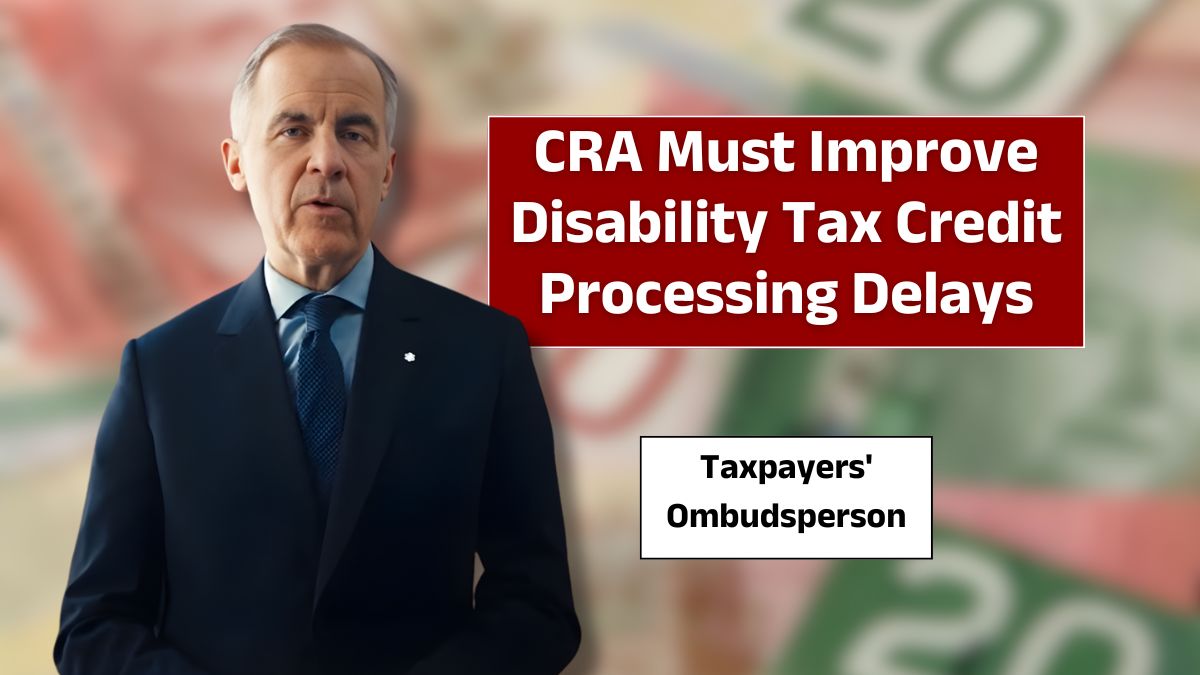
Delays at the Canada Revenue Agency (CRA) are putting added pressure on individuals with disabilities and their families. That’s the concern raised by the Taxpayers’ Ombudsperson, who has officially called on the CRA to make meaningful service improvements—particularly around the processing of the Disability Tax Credit (DTC) and related tax adjustments.
For many, the DTC is a vital financial support. But long wait times and a lack of communication are leaving some of Canada’s most vulnerable citizens in limbo.
Credit

The Disability Tax Credit is a non-refundable tax credit designed to ease the financial burden for people living with disabilities or their supporting family members. Once approved, the DTC can reduce the amount of income tax owed and can even be applied retroactively for up to 10 years. That retroactive benefit often makes a big financial difference.
To qualify, applicants must submit Form T2201, which is reviewed by the CRA. If approved, taxpayers may then request a T1 adjustment to reflect the DTC on previous tax years.
But this process is where many people are hitting a wall.
Delays

According to the Ombudsperson’s Office, applicants are facing lengthy delays at multiple stages of the DTC process:
- Approval of the initial DTC application (Form T2201) can take up to 15 weeks, nearly double the CRA’s 8-week service standard.
- After approval, applicants may wait up to 50 weeks for their T1 tax adjustment to be processed—well beyond the CRA’s 20-week service standard for complex adjustments.
In total, a taxpayer could be left waiting over a year just to access funds they are legally entitled to.
The CRA considers many of these T1 adjustments complex because they often involve multiple tax years or extend beyond the standard three-year reassessment period. While that may be fair from a processing standpoint, many applicants are unaware of these added timelines. The CRA does not clearly communicate these extended wait periods on Form T2201, leading to confusion and frustration.
Policy

The CRA currently uses a “First In, First Out” approach for T1 adjustment processing. While this method appears fair on the surface, the Ombudsperson argues that it doesn’t consider urgency or vulnerability. For someone living with a disability—or their caregiver—the financial strain of waiting nearly a year for tax relief can be devastating.
There’s a growing concern that the CRA’s policies are failing to prioritize those who rely on the DTC most. The call now is for a change in how applications are triaged.
Request
In response to growing complaints, the Taxpayers’ Ombudsperson has made a formal request for the CRA to:
- Change the “First In, First Out” policy for T1 adjustments to prioritize DTC-related requests.
- Improve communication around wait times on Form T2201 and related documents.
- Enhance transparency about processing times for retroactive claims and complex adjustments.
The Ombudsperson acknowledged that while the CRA has taken some steps in the right direction—such as reducing backlogs and piloting a callback system—more action is urgently needed.
Response
The CRA’s recent 100-day service improvement plan does outline efforts to address processing delays and improve client service. Still, many feel it falls short when it comes to DTC applicants.
Quotes from the Ombudsperson underscore the issue:
- “It is too much to ask a taxpayer, let alone one in a vulnerable situation, to wait longer after they have already been determined to be eligible for the DTC.”
- “Fairness is not always about treating everyone the same but about addressing everyone’s unique needs.”
- “Taking swift action on this request will help Canadians who face persistent barriers.”
Role
The Office of the Taxpayers’ Ombudsperson is an independent body that investigates complaints from Canadians who feel they have received poor service from the CRA. It advises the Minister of Finance and the Minister of National Revenue and ensures that the CRA respects the Taxpayer Bill of Rights, which includes the right to:
- Be treated fairly
- Receive timely information
- Expect appropriate service standards
If you’re struggling with long delays or poor communication from the CRA—especially related to the DTC—you can file a complaint with the Ombudsperson’s office. The goal is to push for a more responsive, fair, and inclusive tax system for all Canadians.
FAQs
What is the Disability Tax Credit (DTC)?
A non-refundable tax credit for people with disabilities or their supporters.
How long does CRA take to approve DTC?
It can take up to 15 weeks, nearly double the standard.
What causes T1 adjustment delays?
Complex cases or multi-year adjustments can take up to 50 weeks.
Can DTC be applied retroactively?
Yes, for up to 10 years of past tax returns.
Who can I contact about DTC delays?
You can submit a complaint to the Taxpayers’ Ombudsperson.