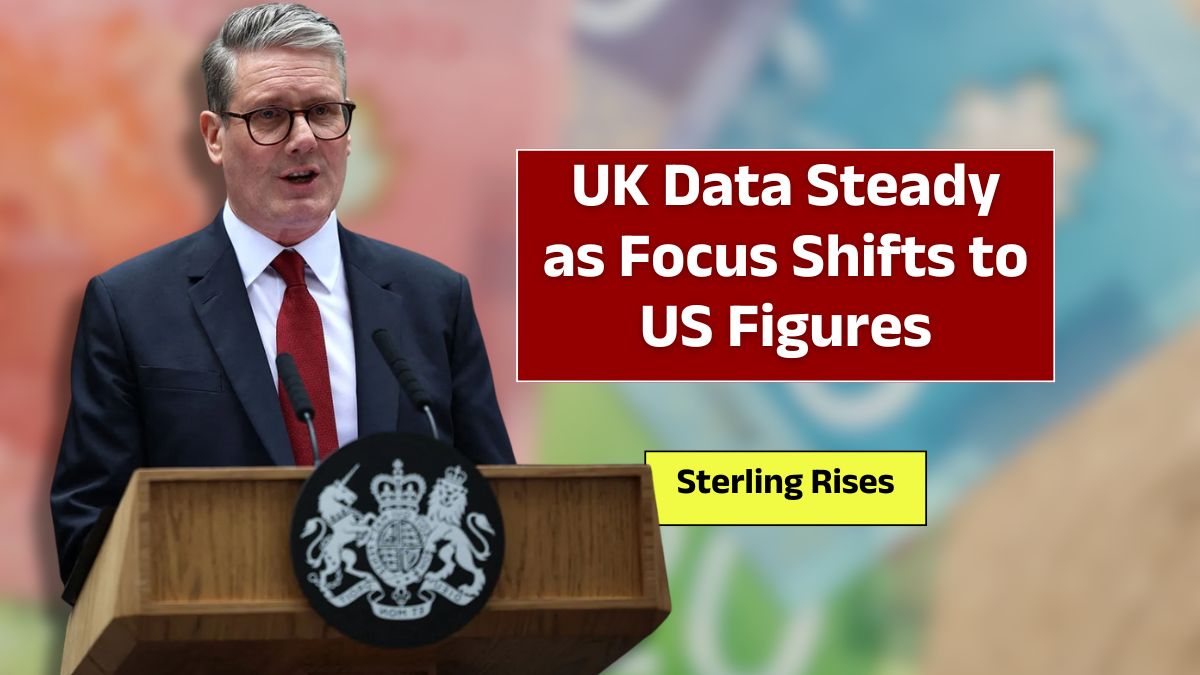
The British pound bounced back on Tuesday after recent dips, climbing against both the euro and the U.S. dollar. The move came as new UK economic data left Bank of England (BoE) interest rate expectations largely unchanged, while traders turned their attention toward key U.S. numbers expected later in the day.
Movement
Sterling edged up by 0.25% to $1.3410 and gained 0.35% against the euro, reaching 87.59 pence, after briefly hitting 87.89 pence — its weakest point since December 3. The uptick was driven in part by better-than-expected UK data and a slight weakening in the U.S. dollar index.
Data

The UK unemployment rate climbed to its highest since early 2021, raising concerns about a weakening labour market. However, that negative news was offset by a better-than-expected S&P Global composite Purchasing Managers’ Index (PMI) for December, which rose to 52.1. That’s above economists’ expectations, though still below its historical average.
This mixed data — a weakening job market paired with modest business activity growth — kept expectations for BoE rate cuts steady.
Gilt Yields
Yields on two-year UK government bonds (gilts), which are especially sensitive to central bank policy, rose by 1.5 basis points to 3.77%. They had been up just 1 basis point before the PMI was released, suggesting the data slightly shifted sentiment toward tighter policy, at least for now.
Expectations

Despite the latest numbers, markets remain confident that the BoE is on track to cut interest rates. Traders are pricing in around 60 basis points of rate cuts by the end of 2026, and a 90% chance of a cut as early as Thursday, when the next BoE decision is due.
Most economists expect a 5-4 vote in favour of lowering the benchmark rate from 4.0% to 3.75%, though upcoming inflation data could still sway the final call.
Commentary
Jefferies economist Modupe Adegbembo commented that while the PMI surprise was “welcome,” it doesn’t change the broader economic picture. “It still points to sluggish UK growth at best,” she said, adding that the key concern now is a further deterioration in the job market.

Jefferies continues to predict that the BoE will ease policy more aggressively than markets are currently pricing, with the Bank Rate falling to 3% by the end of 2026.
CPI Watch
The next major input for BoE decision-makers will be Wednesday’s release of CPI inflation data for November. Any surprise there — either higher or lower than expected — could influence the BoE’s tone and timing on interest rate cuts.
Berenberg economist Andrew Wishart also expressed concern about slowing growth and rising job losses. “We recently revised down our 2026 forecasts for both growth and inflation,” he said. “The PMI data doesn’t change that — it confirms our view that rate cuts are coming.”
He’s now expecting three rate cuts in 2026, regardless of the slightly improved PMI figures.
Market Snapshot
Here’s how the markets moved on Tuesday:
| Asset/Index | Change |
|---|---|
| GBP/USD | +0.25% to $1.3410 |
| GBP/EUR | +0.35% to 87.59p |
| 2-Year Gilt Yield | +1.5 bps to 3.77% |
| U.S. Dollar Index | Slight decline |
| Euro/USD | Firmed slightly |
Outlook
The pound’s recovery may offer a bit of optimism for UK investors, but the economic picture remains murky. Growth is sluggish, inflation is cooling, and the job market is wobbling — all signs that rate cuts are on the way.
What happens next depends heavily on upcoming U.S. economic figures and UK inflation data, both of which could reshape the policy path heading into 2024 and beyond.
The BoE is walking a tightrope: balancing the risk of slowing demand against the need to tame inflation. For now, the markets are betting on a more dovish path — and the pound is riding that sentiment.
FAQs
Why did the pound rise today?
Stronger UK PMI data and stable rate expectations lifted it.
What is the BoE expected to do Thursday?
A rate cut from 4.0% to 3.75% is widely expected.
What did the UK PMI show?
It rose to 52.1, indicating modest economic growth.
Will the BoE cut rates in 2026?
Markets expect cuts; economists forecast a 3% rate.
When is the UK inflation data released?
CPI data for November is due on Wednesday.