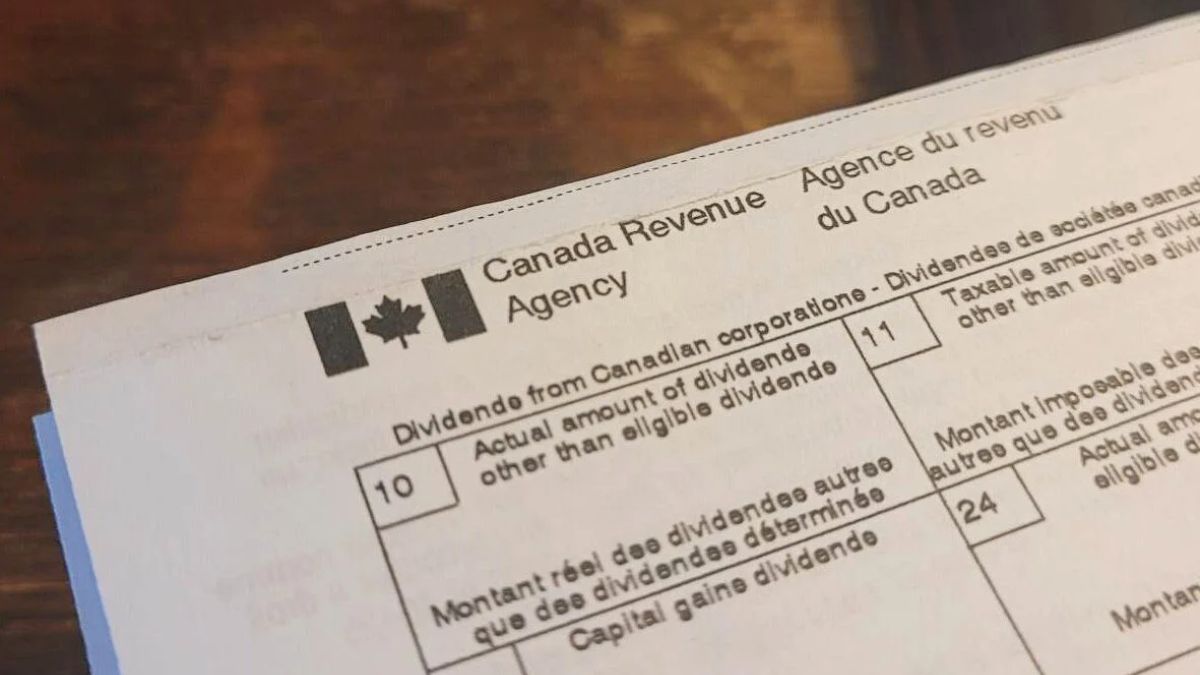

If you’re a Canadian crypto investor, the taxman is watching more closely than ever. According to a recent report, the Canada Revenue Agency (CRA) believes that as many as 40% of crypto users may be evading taxes — either on purpose or due to poor reporting. With tens of millions in unpaid taxes already uncovered, the CRA is stepping up enforcement in a big way.
Audits
The CRA isn’t just guessing. It has a dedicated team of 35 cryptoasset auditors who have reviewed over 230 files in recent years. Their work has uncovered CAD$100 million (about US$72 million) in unpaid taxes from digital asset transactions over the past three years alone.

That figure isn’t small change. And it’s led the CRA to estimate that nearly 40% of Canadian crypto users are either deliberately or accidentally failing to report their earnings properly.
Challenges
Despite the scale of the problem, criminal charges are rare. In fact, none have been laid since 2020. Why? The CRA admits that it’s tough to track crypto users accurately. The decentralized and anonymous nature of cryptocurrencies makes it difficult to identify who owes what.
To help address that, the agency is now turning to legal tools to compel companies to hand over user data. This marks a shift in strategy — going directly to crypto firms instead of relying on voluntary disclosures from users.
Dapper Labs

The most recent example of this crackdown involved Vancouver-based Dapper Labs, a well-known name in the Canadian crypto scene. In September, the CRA obtained a court order to force Dapper Labs to hand over customer data.
While the CRA originally wanted info on 18,000 of Dapper’s users, it eventually agreed to focus on just 2,500 after negotiating with the company and its legal team. Still, this represents one of only two times a Canadian court has forced such a disclosure. The other was in 2020, involving Toronto-based Coinsquare.
Coinsquare
Coinsquare was the first exchange to face this kind of legal action. In March 2021, it agreed to share detailed user information with the CRA, but not all of it. The deal covered high-value accounts worth CAD$20,000 (about US$14,449) or more, from 2014 through 2020. Roughly 16,500 top accounts by trading volume were included.

But this was still a compromise. Coinsquare claimed that it managed to shield 90-95% of its clients’ data from disclosure, much less than the CRA initially demanded.
“We expect similar disclosures will soon be required from other Canadian exchanges,” the company warned — and they were right.
Expansion
By mid-2024, the CRA had ramped up enforcement significantly. According to the National Post, the agency had around 400 crypto-related audits or investigations underway. That’s on top of the CAD$54 million (US$39 million) in reassessed taxes linked to unreported digital asset transactions in the 2023–2024 fiscal year alone.
Clearly, the CRA isn’t slowing down — it’s just getting started.
Global Standards
This aggressive push for compliance didn’t come out of nowhere. It’s part of a broader global shift in how governments view crypto.
Earlier this year, the Organisation for Economic Co-operation and Development (OECD) — an international body promoting economic cooperation — published a report on the implementation of global crypto tax rules.
According to the OECD, 75 countries have now signed onto its Crypto-Asset Reporting Framework (CARF), which aims to standardize how digital asset income is reported and taxed across borders.
Canada is one of those 75 countries. As of November 2024, it had officially committed to following CARF standards — a move that likely explains the CRA’s intensified interest in crypto users.
Reality Check
Let’s be real — a lot of crypto investors didn’t think the CRA would be able to keep up with decentralized finance. But with court orders, expanded auditing powers, and new global standards, that’s no longer the case.
If you’re a crypto trader or investor in Canada, now’s the time to get your tax affairs in order. Even if you didn’t mean to avoid taxes, the CRA won’t necessarily go easy if they catch you underreporting. And while no charges have been laid recently, that could change fast as enforcement tightens.
The CRA’s message is loud and clear: Crypto isn’t a tax-free loophole. The rules are changing — and fast.
FAQs
What % of crypto users may evade taxes?
CRA estimates up to 40% are at high risk of tax non-compliance.
How much unpaid crypto tax did CRA find?
CAD$100 million (US$72M) over the past three years.
Which crypto firms shared user data?
Coinsquare and Dapper Labs provided data to CRA.
Is Canada part of global crypto tax rules?
Yes, Canada joined the OECD’s Crypto-Asset Reporting Framework.
Are there criminal charges for crypto evasion?
No criminal charges have been filed since 2020.