
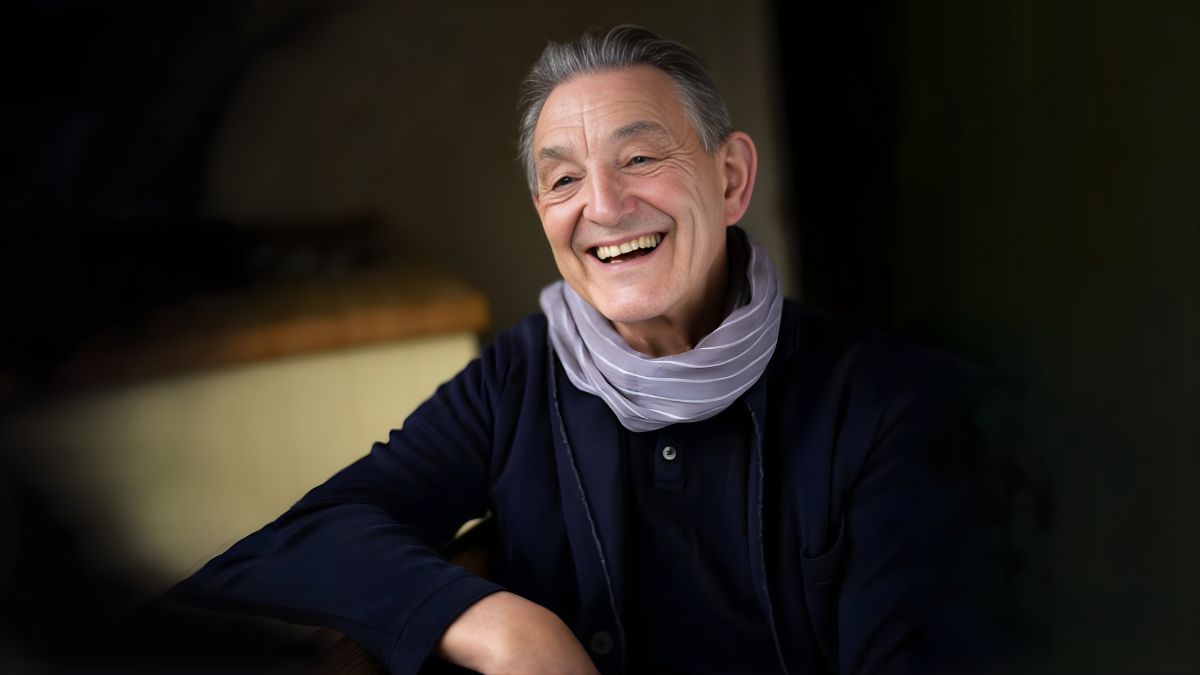
When you think of a conductor, you probably picture someone standing on a podium, baton in hand, commanding an orchestra with sweeping gestures. Now picture Trevor Pinnock—seated at a harpsichord, leading the music not with a baton, but through his fingers, his eyes, and his deep musical instinct. It’s a different kind of leadership, one rooted in trust and a shared understanding of the music.
Trevor Pinnock is one of the rare musicians who masterfully balances two demanding roles: playing and conducting. Whether he’s performing a Bach harpsichord concerto or guiding a Mozart symphony, he manages to be both the engine and the steering wheel of the ensemble. So how does he do it? Let’s take a closer look.
Origins
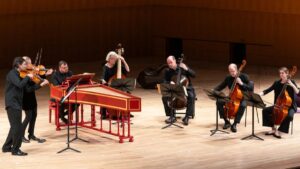
Pinnock’s journey began as a harpsichordist. In the early 1970s, he was one of the key figures in the historical performance movement. He founded The English Concert in 1972, not just as a conductor, but as a player. This chamber-sized ensemble focused on Baroque and early Classical repertoire performed on period instruments.
From the beginning, Pinnock’s leadership style was different. Rather than separating himself from the group, he led from within—literally. He played the continuo part at the harpsichord, guiding the ensemble through feel, timing, and subtle gestures. This blend of roles became his trademark.
Playing
When Pinnock performs as a soloist, especially in keyboard concertos by Bach, Handel, or Haydn, he’s not just focused on his own part. He’s also directing the orchestra. From his seat at the harpsichord, he communicates through nods, cues, and breath. It’s a conversation, not a command.
This approach allows for incredible intimacy and flexibility. The musicians aren’t following a distant leader—they’re responding to one of their own. It’s chamber music on a larger scale.
Conducting
Of course, Pinnock doesn’t always play and conduct at the same time. For larger works—like symphonies, oratorios, or full-scale choral pieces—he steps up to the podium. But even then, his harpsichordist mindset remains. His conducting is precise, clear, and musical. He avoids over-conducting, preferring to shape phrases with his hands and body rather than imposing strict control.
One of his strengths is knowing when to step in and when to let the ensemble lead itself. That balance is what keeps his performances so fresh and alive. You never feel like the players are being micromanaged—they’re collaborating.
Focus
Balancing playing and conducting isn’t easy. It takes intense focus and multitasking. While navigating a tricky solo line, Pinnock must also cue entrances, shape dynamics, and watch for balance across the ensemble. It’s like being the driver and navigator at the same time.
But he makes it look effortless. Musicians who’ve worked with him often describe how natural it feels. That ease comes from years of experience—and a deep trust in his fellow players.
Practice
This dual role isn’t something Pinnock just pulls off on the fly. It takes thoughtful planning. He often rehearses both the solo and ensemble parts to understand the full picture. He knows when he’ll need to give a visual cue or adjust his playing to support the orchestra.
It also means choosing repertoire wisely. Not all pieces are suited for playing and conducting at once. Pinnock selects works where this approach enhances, rather than limits, the musical result.
Evolution
As his career evolved, Pinnock began taking on more traditional conducting roles—leading orchestras from the podium in Haydn, Mozart, and even early Romantic repertoire. But his grounding in keyboard playing never left him. It shaped his phrasing, his pacing, and his deep respect for the music.
Even when he’s not at the keyboard, his style is hands-on, attentive, and collaborative. You can still sense the harpsichordist in the conductor.
Summary Table
Here’s a quick breakdown of how Pinnock balances both worlds:
| Role | Key Characteristics |
|---|---|
| Harpsichordist | Leads from within, focuses on ensemble feel |
| Conductor | Uses clear gestures, minimal interference |
| Player-Conductor | Combines direction with live performance |
| Style | Collaborative, expressive, historically rooted |
| Strength | Balancing precision with flexibility |
Trevor Pinnock proves that leading an ensemble doesn’t always require a baton. Sometimes, all it takes is a pair of sensitive hands, a keen ear, and a deep love for the music. By staying connected to both the harpsichord and the podium, he brings an intimacy and intelligence to his performances that’s rare in the classical world.
It’s not about multitasking for show—it’s about merging two musical roles into one seamless experience. And that’s what makes his approach so timeless.
FAQs
Does Pinnock conduct while playing?
Yes, he often leads Baroque concertos from the harpsichord.
Is he also a soloist?
Yes, especially in Bach and Handel keyboard works.
When does he use a baton?
He usually doesn’t. He conducts with hands or gestures.
How does he balance both roles?
With clear cues, deep focus, and rehearsed communication.
Is this common among conductors?
Not very—few lead and perform simultaneously like he does.