
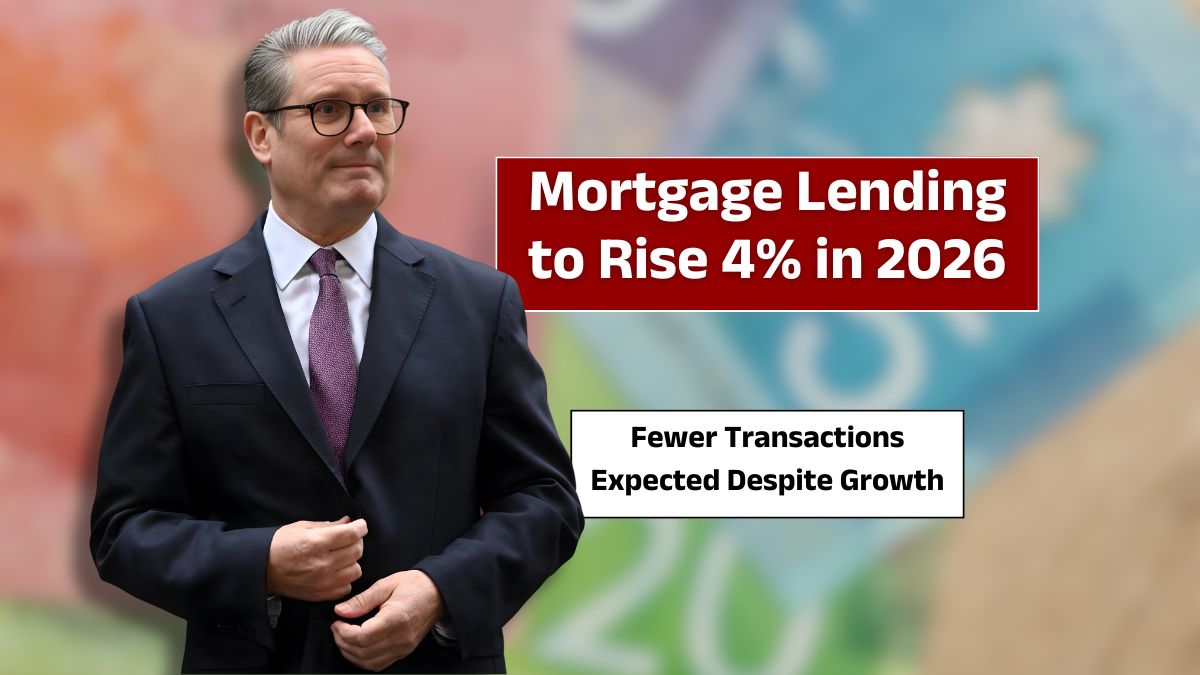
The UK mortgage market is heading into 2026 with mixed signals. While lending volumes are expected to grow modestly, the number of property transactions is set to decline slightly, highlighting the continuing challenge of affordability for homebuyers.
According to UK Finance’s latest Mortgage Market Forecast, overall gross lending will increase by 4% to reach £300 billion next year — but this doesn’t necessarily mean more people will be buying homes.

Let’s break down what this means and what’s really going on behind the numbers.
Lending
In 2025, lending for house purchases jumped by 22%, hitting £176 billion. That surge was largely driven by a pre-April rush, as buyers raced to beat the stamp duty increase. But in 2026, the growth rate is expected to slow significantly to just 2%, bringing the total to around £180 billion.
Despite the slowdown in purchase lending, overall gross lending is forecasted to grow 4%, reaching £300 billion — and that’s largely due to strong activity in remortgaging and product transfers.

This paints a clear picture: while fewer new purchases may take place, refinancing will keep the market busy.
Transactions
Even with higher lending volumes, UK Finance expects 10,000 fewer transactions in 2026 compared to 2025. That’s a drop from 1.21 million to around 1.20 million.
Why the disconnect? It all comes down to affordability. Despite interest rate cuts this year, mortgage payments are still high compared to average incomes. For many would-be buyers, that’s a big barrier.

More money might be flowing through the market, but fewer people are actually making moves.
UK Mortgage Market Overview
| Year | House Purchase Lending (£bn) | Total Lending (£bn) | Transactions (millions) |
|---|---|---|---|
| 2025 | 176 | ~288 | 1.21 |
| 2026 | 180 | 300 | 1.20 |
Remortgages
The remortgage market was buzzing in 2025 — and 2026 is looking similar.
External remortgaging grew by 17% this year, reaching £71 billion. Internal product transfers jumped by 18%, climbing to £256 billion. With more fixed-rate deals ending, this trend is expected to continue.
In 2026, UK Finance forecasts external remortgaging to grow by another 10%, up to £77 billion. Product transfers will also rise, but only slightly, by 2% to £261 billion.
There’s a simple reason for this spike: around 1.8 million fixed-rate mortgages are due to expire in 2026, following the 1.6 million that ended in 2025.
Buy-to-let
Buy-to-let lending saw an 11% rise in 2025, reaching £11 billion. However, landlords shouldn’t expect much movement next year.
UK Finance expects BTL lending to remain flat in 2026, as ongoing tax burdens and regulatory pressures weigh on investor appetite.
This stability could mean fewer new landlords entering the market — which might, in turn, affect rental supply.
Arrears
There’s a silver lining in the arrears data.
Mortgage arrears fell to 92,100 cases in 2025, down from 104,800 the year before. And in 2026, that number is expected to drop again by 5%, reaching around 87,500.
Thanks to stronger lending practices and easing inflation, fewer borrowers are falling behind on payments — a promising sign of market resilience.
Possessions
On the flip side, possessions are rising — slowly but steadily.
There were around 8,600 mortgage possessions in 2025, and UK Finance forecasts a 9% increase in 2026, bringing the total to about 9,400.
That might sound worrying, but context matters. These numbers are still low compared to pre-pandemic levels. As the courts return to full capacity and lenders work through backlogs, a slight increase was expected.
Rates
This year, borrowers enjoyed some relief with three Bank of England base rate cuts. That gave lenders room to offer more competitive mortgage products and helped ease affordability pressures slightly.
As we move into 2026, many economists hope for more cuts, which could further support first-time buyers and those refinancing.
Outlook
Despite modest lending growth, 2026 is shaping up to be a cautious year for the housing market. Affordability remains the major roadblock, especially as mortgage payments continue to outpace wage growth.
Even with lenders offering better products and government schemes aimed at boosting homeownership, many buyers will still struggle to afford the homes they want.
Still, for those with fixed-rate mortgages coming to an end, 2026 could be a great time to remortgage and potentially save. And if rates continue to fall, we could see improved affordability later in the year — though it likely won’t spark a surge in transactions.
Bottom line? The market will stay active, but more from remortgages than from new purchases. If you’re planning a move in 2026, stay sharp, shop smart, and keep your finances in check.
FAQs
Will lending increase in 2026?
Yes, UK Finance predicts a 4% rise in total lending.
Are transactions expected to fall?
Yes, 10,000 fewer transactions are forecast for 2026.
What’s driving remortgaging growth?
More fixed-rate mortgage expiries are boosting activity.
Will buy-to-let lending grow?
No, it’s expected to stay flat due to taxes and rules.
Are arrears improving?
Yes, arrears are forecast to drop 5% to 87,500 in 2026.