

When you think of Trevor Pinnock, your mind probably goes straight to Bach, Handel, and the golden glow of Baroque. But his work with Mozart is just as compelling—and arguably just as influential.
With clarity, elegance, and a deep knowing of period performance, Pinnock’s Mozart recordings gave 18th-century music a fresh identity that changed how many listeners—and performers—approached Classical style.
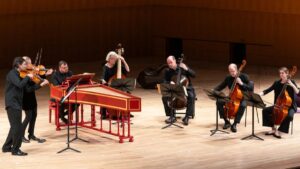
From symphonies to piano concertos, Pinnock brought Mozart back to his roots. And in doing so, he helped redefine the sound of Classical music for a new generation.
Shift
Mozart’s music had long been the domain of big modern orchestras, lush vibrato, and Romantic phrasing. Then Pinnock stepped in, baton in one hand, harpsichord under the other, and stripped it back—not to reduce it, but to restore it.
His approach wasn’t dry or academic. Instead, it was alive with pulse and drama, but shaped by the textures, tempos, and instruments of Mozart’s time. Period horns, gut strings, and natural winds gave the music a leaner, more transparent feel. You could suddenly hear things modern recordings often smoothed over.
Symphonies
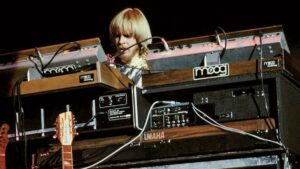
Pinnock’s recordings of Mozart’s late symphonies—particularly Nos. 29, 31, 34, 35, 38, 39, 40, and 41—are some of his finest work. Recorded with The English Concert on period instruments, these symphonies are bursting with clarity and bounce.
Take Symphony No. 29 in A major. The first movement has an energy that feels almost Haydn-like in its wit and pacing. In the “Jupiter” Symphony (No. 41), Pinnock makes the counterpoint in the finale crystal clear without ever losing momentum. It’s exciting, transparent, and rhythmically alive.
These aren’t grand, Romantic statements—they’re precise, emotional conversations that move with light-footed elegance.
Concertos
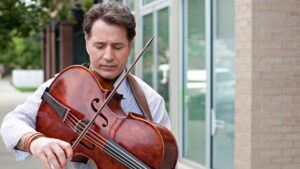
Pinnock also made waves with his recordings of Mozart’s piano concertos, collaborating with fortepianists like Malcolm Bilson and Christian Zacharias. Instead of using a full-size grand piano, these recordings used historical fortepianos, which changed the entire dynamic between soloist and orchestra.
In these versions, Pinnock keeps the orchestra agile and responsive. The dialogues between soloist and ensemble feel more like chamber music—intimate and conversational. His conducting stays light and supportive, never overwhelming the soloist, allowing Mozart’s subtle wit and emotion to shine.
Operatic Touch
Another strength in Pinnock’s Mozart is his sense of drama. Even in purely instrumental works, there’s an operatic flair. He understands Mozart’s theatrical instincts and brings them out in the pacing, phrasing, and color.
Listen to the slow movements in the concertos or symphonies—they’re not just beautiful; they’re characters. Pinnock lets the music speak, full of sighs, surprises, and tension. His approach highlights Mozart’s emotional range without ever sounding forced.
Influence
Pinnock’s Mozart recordings didn’t just impress critics—they inspired a whole generation of musicians and ensembles. His work helped pave the way for groups like the Orchestra of the Age of Enlightenment and conductors like John Eliot Gardiner and Christopher Hogwood to reimagine Mozart in a new (or very old) light.
He showed that playing Mozart with historical instruments didn’t mean sacrificing warmth or energy. On the contrary, it often revealed more of the music’s personality.
Summary Table
Here’s a quick glance at Pinnock’s major Mozart contributions:
| Recording Type | Highlights |
|---|---|
| Symphonies | Nos. 29, 31, 35, 38–41 with The English Concert |
| Piano Concertos | With Malcolm Bilson, Christian Zacharias |
| Instruments | Period strings, winds, horns, and fortepiano |
| Style | Clear, energetic, historically informed |
| Impact | Redefined Classical performance aesthetics |
Trevor Pinnock didn’t just record Mozart—he reintroduced him. By returning to the instruments and performance styles of the Classical era, Pinnock uncovered layers of color, clarity, and charm that many had forgotten. His Mozart isn’t overly polished or sentimental—it’s direct, sincere, and fully alive.
For anyone looking to rediscover Mozart through a new lens—or rather, through an old one—Pinnock’s recordings are essential listening. They’re not just beautiful performances; they’re milestones in the evolution of Classical interpretation.
FAQs
Which Mozart symphonies did Pinnock record?
He recorded symphonies 29, 31, 34–41 with The English Concert.
Did he use modern instruments?
No, he used period instruments for authenticity.
Who played piano in his recordings?
Malcolm Bilson and Christian Zacharias performed the concertos.
What’s different in his Mozart?
More clarity, lighter textures, and authentic tempos.
Why are these recordings important?
They helped redefine Mozart’s style for modern audiences.