

When most people think of classical music, instruments like the piano, violin, or cello usually come to mind. But thanks to a few passionate musicians, one nearly forgotten instrument — the harpsichord — made a powerful comeback in the 20th century. And at the forefront of that revival? Trevor Pinnock.
Let’s look into how this British musician turned a once-dusty relic of the Baroque era into a modern concert staple and became a true ambassador for historical music performance.
Origins
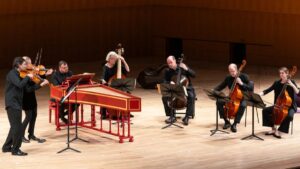
Trevor Pinnock’s journey with the harpsichord began early. He studied at the Royal College of Music in London, initially focusing on the organ. But it was his discovery of the harpsichord — with its unique plucked sound and historical character — that truly ignited his passion.
At the time, the harpsichord was hardly mainstream. It was seen as a niche or academic curiosity, mostly confined to dusty corners of early music departments. But Pinnock saw more — he saw a vibrant voice waiting to be heard again.
Ensemble
In 1972, Pinnock took a bold step and founded The English Concert, a chamber orchestra dedicated to performing Baroque and Classical music using period instruments. This move wasn’t just about historical accuracy — it was about energy, authenticity, and making old music feel new.
With the harpsichord as a central part of the ensemble, Pinnock used it both as a continuo instrument and a lead solo voice, bringing it out from the shadows and into the spotlight.
Concerts with The English Concert showcased how dynamic and expressive the harpsichord could be. Whether accompanying a Handel aria or leading a Bach concerto, the instrument no longer sounded archaic — it sounded alive.
Recordings
If live performances helped the harpsichord regain respect, Pinnock’s recordings spread its influence worldwide. Beginning in the late 1970s and continuing for decades, his recordings with The English Concert on Archiv Produktion and Deutsche Grammophon set new standards.
Some standout recordings include:
| Work | Label / Year | Highlights |
|---|---|---|
| Bach’s Brandenburg Concertos | Archiv, 1982 | Harpsichord sparkles in Concerto No. 5 |
| Handel’s Concerti Grossi | Archiv, 1984 | Crisp articulation and energy |
| Bach Keyboard Concertos | DG, 1995 | Pinnock leads from harpsichord with clarity |
Through these recordings, listeners worldwide were reintroduced to the harpsichord’s agility, clarity, and charm — often for the first time.
Teaching
Pinnock didn’t just perform; he taught and inspired. His work as a teacher at the Royal Academy of Music and through international masterclasses helped train a new generation of historically informed performers.
By sharing his passion and technique, Pinnock ensured that the harpsichord wouldn’t fade back into obscurity. Instead, it became part of a living tradition.
He emphasized not just playing the notes, but understanding the historical context, style, and rhythm that gave Baroque music its spirit. That approach was revolutionary for its time — and it caught on.
Modern
Thanks to Pinnock’s efforts, the harpsichord began appearing in places it hadn’t been seen in years — major concert halls, prominent festivals, and even alongside modern orchestras.
He helped redefine what “classical music” could mean, making space for older instruments and styles without compromising musical quality.
And let’s not forget his collaborations with other musicians. Working with violinists like Rachel Podger or vocalists like Emma Kirkby, Pinnock placed the harpsichord at the heart of fresh, expressive chamber music that blended authenticity with modern emotional depth.
Legacy
Trevor Pinnock didn’t just popularise the harpsichord — he rescued it from musical extinction in the public eye. By building an ensemble around it, recording masterpieces, and teaching its language, he made it matter again.
Today, thanks to his influence, young musicians play the harpsichord with confidence, audiences hear it with excitement, and composers even write for it again. It’s no longer a museum piece. It’s a vital, living instrument — and Trevor Pinnock is a huge reason why.
FAQs
Why is Trevor Pinnock important?
He helped revive the harpsichord and period instrument performance.
What is The English Concert?
An ensemble founded by Pinnock to perform Baroque music authentically.
What recordings made Pinnock famous?
Bach’s Brandenburgs and Handel’s Concerti Grossi with The English Concert.
Did Pinnock teach music too?
Yes, he taught at the Royal Academy and gave masterclasses worldwide.
Is the harpsichord popular now?
Yes, largely thanks to Pinnock’s influence and performances.