

Trevor Pinnock is no stranger to Bach. Over decades, he’s carved a reputation as one of the most thoughtful and authentic interpreters of Baroque music.
But when he released his version of The Well-Tempered Clavier (Book I) on harpsichord, it wasn’t just another Bach recording—it felt like a revelation. While countless pianists and harpsichordists have tackled this monumental work, Pinnock’s version still feels remarkably alive, honest, and, dare we say, modern.
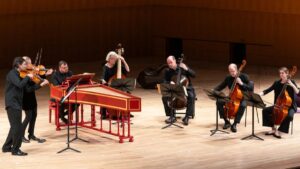
So, what exactly makes his recording of The Well-Tempered Clavier stand the test of time? Let’s break it down.
Clarity
First up—clarity. Pinnock’s playing is all about definition. Each voice in Bach’s complex counterpoint comes through like threads in a tightly woven tapestry. Whether it’s a simple two-part invention or a dense fugue, you can hear every line breathing independently, yet supporting the whole.
This is where period instruments come in. The harpsichord’s crisp attack and fast decay allow for clean articulation without the pedal blur of a modern piano. Pinnock doesn’t just let the instrument do the work, though—his touch is precise, and his phrasing intentional. It’s not just technical; it’s architectural.
Flow
While many performances of The Well-Tempered Clavier can feel like a museum tour—admire this, now move on—Pinnock makes it feel like a story unfolding. There’s real musical flow between the preludes and fugues. Some are playful, some meditative, some tragic—but none are static.
You never get the sense that he’s playing from a fixed tempo map. Pinnock bends with the music, giving subtle rubato and space where needed, always within the bounds of Baroque style. It’s like he’s having a conversation with Bach, and we’re just lucky to listen in.
Emotion
Here’s the kicker: Pinnock’s Bach is full of feeling. This might surprise people who associate the harpsichord with cold precision. But Pinnock brings warmth, wit, and even vulnerability. The E-flat minor Prelude aches with melancholy, while the C major Prelude opens the whole book with hopeful simplicity.
This isn’t sentimental playing. It’s expressive within bounds—just enough to make the music breathe without distorting it. Pinnock shows that emotional depth in Baroque music doesn’t need pedal swells or romantic gestures. It just needs understanding.
Authenticity
Pinnock has spent his life in early music, and it shows. He doesn’t just play Bach “as written”—he understands the language. His ornamentation feels natural, not decorative. His tempos make sense historically and musically. He lets the harpsichord speak with its own voice, rather than trying to force it to behave like a piano.
For listeners used to piano versions of The Well-Tempered Clavier, Pinnock’s reading offers a refreshing shift in perspective. It’s not necessarily “better” or “worse”—just truer to the world Bach wrote for. And that historical lens brings surprising freshness.
Simplicity
One of the most powerful aspects of this recording is its restraint. Pinnock never tries to “wow” the listener with speed or drama. Instead, he trusts the music. That might sound simple, but it takes real maturity.
In a world full of flash and flair, Pinnock’s understatement is a breath of fresh air. He plays The Well-Tempered Clavier not like a concert showpiece but like a lifelong companion—one he knows intimately but still discovers something new in each time.
Legacy
Released relatively late in Pinnock’s career, this recording feels like a summing-up. It’s thoughtful, distilled, and deeply personal. Many fans consider it a late-career masterpiece. It shows not just what Pinnock can do, but what Bach still has to offer us, even after hundreds of years.
Here’s a quick look at why it stands out:
| Feature | Pinnock’s Version |
|---|---|
| Instrument | Harpsichord (period instrument) |
| Key Strength | Clarity, flow, and musicality |
| Emotional Tone | Honest, expressive, but never exaggerated |
| Style | Historically informed, yet approachable |
| Recording Appeal | Intimate, warm, and surprisingly modern |
So yes—Trevor Pinnock’s Well-Tempered Clavier still feels fresh, not because it’s flashy or trendy, but because it’s true. It’s Bach stripped of ego, played by someone who’s not trying to own the music—just serve it. And in that honesty lies its enduring magic.
FAQs
What instrument did Pinnock use?
He played it on a harpsichord, not a piano.
Is the recording historically informed?
Yes, it’s based on Baroque-era performance practices.
Why is Pinnock’s version unique?
It balances clarity, flow, and emotion beautifully.
Is this suitable for first-time listeners?
Absolutely, it’s very approachable and clear.
When was it recorded?
It was released in the 2010s as a mature, late-career work.