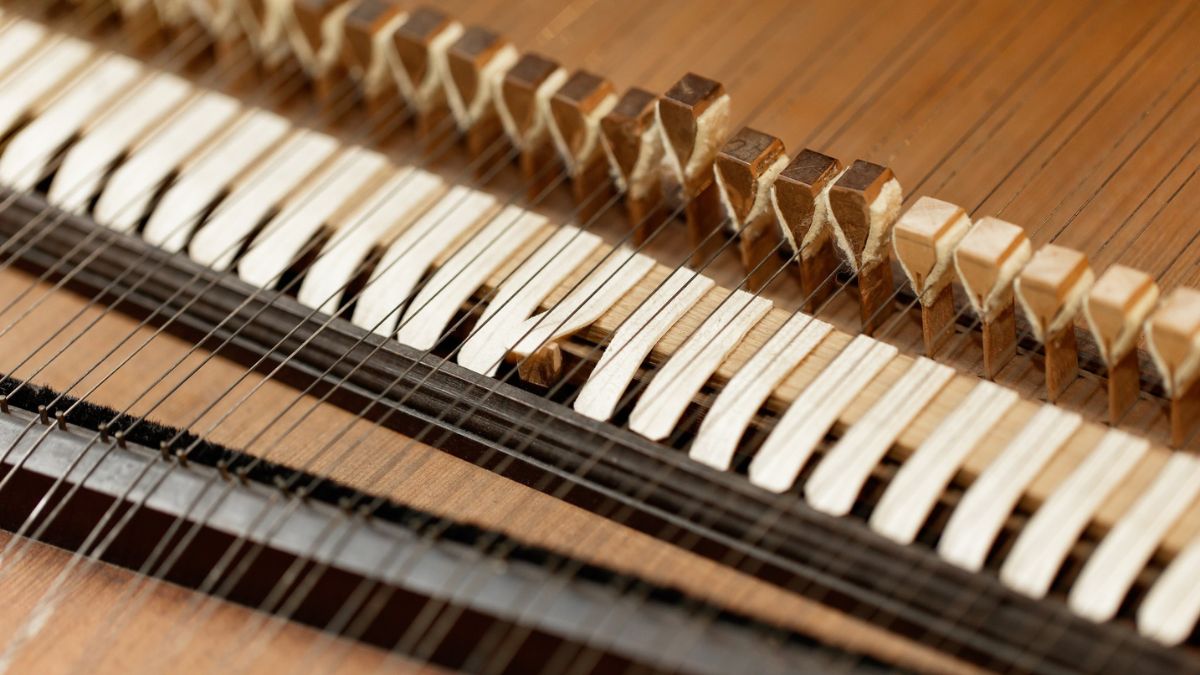
The harpsichord may look like a piano’s quirky cousin, but it has its own unique voice, history, and charm. Popular from the Renaissance through the Baroque era, the harpsichord shaped the sound of composers like Bach, Handel, and Scarlatti.
But what exactly is a harpsichord? How does it sound? And how is it different from the piano you might know today? Whether you’re new to classical music or just curious about early instruments, this guide will walk you through it all in plain language.
Basics
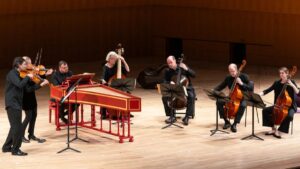
At first glance, a harpsichord looks a lot like a piano. It has black and white keys, a long wooden body, and a lid that can be propped open. But here’s the key difference: the way it makes sound.
While a piano uses hammers to strike the strings, the harpsichord uses tiny quills or plectra to pluck the strings — more like a guitar than a hammering instrument. That’s why its sound is sharp, bright, and a bit metallic.
No matter how hard or soft you press the keys, the volume stays the same. So unlike a piano, where you can play with dynamics, a harpsichord is all about texture and rhythm.
Sound
The sound of the harpsichord is crisp, delicate, and often described as “zingy” or “twangy.” It doesn’t have the big, emotional swell of a piano. Instead, it cuts through with clarity — perfect for intricate music like fugues or fast runs.
Here’s what to expect:
- No sustain like a piano
- Even volume across all notes
- Fast attack, fast decay (notes don’t ring out long)
- A slightly buzzing quality in some models
You’ve probably heard a harpsichord in movies set in the 1600s or 1700s, or even in some pop songs for a retro feel.
History
The harpsichord was first developed in the late Middle Ages and really took off during the Renaissance and Baroque periods (roughly 1500–1750). It became the go-to keyboard instrument for church services, royal courts, and composers.
Famous harpsichord-loving composers include:
- Johann Sebastian Bach
- George Frideric Handel
- Domenico Scarlatti
- François Couperin
- Henry Purcell
But by the late 1700s, it started to fall out of favor. Why? The piano had arrived — and it could do something the harpsichord couldn’t: play loud and soft. That expressive power won audiences over, and the harpsichord slipped into history.
Comeback
For over a century, the harpsichord was mostly forgotten. But in the 20th century, it made a comeback thanks to early music pioneers like Wanda Landowska, Gustav Leonhardt, and Trevor Pinnock.
They believed Baroque music should be played on the instruments it was written for. Their performances showed that the harpsichord wasn’t old-fashioned — it was essential for capturing the music’s true character.
Today, harpsichords are used in concerts, recordings, and historically informed performances around the world.
Harpsichord vs Piano
Let’s look at the key differences between the harpsichord and the piano:
| Feature | Harpsichord | Piano |
|---|---|---|
| Sound Production | Plucks strings with quills | Hammers strike strings |
| Dynamics | Fixed (no loud or soft) | Fully dynamic (soft to loud) |
| Sustain Pedal | None | Yes, for longer note sustain |
| Sound | Bright, metallic, crisp | Warm, rich, and resonant |
| Era Used | 1500s–1700s | 1700s–today |
| Common Use Today | Baroque & early music concerts | Classical, jazz, pop, and more |
These differences matter a lot when choosing the right instrument for a piece of music. A Mozart sonata sounds great on a piano, but a Bach prelude really comes alive on a harpsichord.
Types
There’s not just one type of harpsichord. In fact, different countries built their own versions with unique designs.
Here are a few:
- Italian harpsichords – Light and simple, used for quick music
- French harpsichords – Richer tone, used for expressive dance pieces
- Flemish harpsichords – Known for beauty and craftsmanship
- Double manual harpsichords – Have two keyboards to switch sounds
Many have beautiful painted lids, floral decorations, and Latin inscriptions. They’re as much art as instruments.
Famous Works Featuring Harpsichord
Here are some great pieces to hear the harpsichord in action:
| Composer | Piece | Why It’s Great |
|---|---|---|
| Bach | Goldberg Variations | Complex, expressive harpsichord work |
| Handel | Harpsichord Suites | Full of character and elegance |
| Scarlatti | Sonatas for Harpsichord | Playful, fast, and rhythmically bold |
| Rameau | Pièces de Clavecin | French style, colorful harmonies |
These works show just how rich and exciting the harpsichord’s world can be.
The harpsichord isn’t just a quirky old keyboard — it’s a key to knowing centuries of music. From its delicate plucks to its royal history, this instrument has a character all its own. And thanks to modern performers, it’s more alive today than ever. Whether you’re listening to Bach or exploring something new, the harpsichord invites you to hear music with fresh ears.
FAQs
What is a harpsichord?
A keyboard instrument that plucks strings to make sound.
How is it different from a piano?
It has no dynamics and uses plucking, not hammering.
Who used the harpsichord?
Composers like Bach, Handel, and Scarlatti.
Does the harpsichord have pedals?
No, it doesn’t have sustain or soft pedals like a piano.
Is the harpsichord still used today?
Yes, in early music and historical performances.